Impact of hurried legislation in our society
Since the independence of India, our parliament has been the primary law making body of our government and as our society progressed at a rapid pace, our lawmakers were able to keep up with it most of the time.
However in recent years, the parliament has been hastily passing bills without sufficient deliberation and the impact of the enforcement of such laws is drastic.
What is Hurried Legislation actually?
Hurried legislation doesn’t refer to the time taken to pass the bill but rather the scrutinisation process it goes through. This is where Parliamentary Committees come into play.
Parliamentary committees (PCs) are formed to deal with various issues that the legislature cannot directly handle due to their immense workload. That usually includes scrutinisation of draft bills and monitoring the functioning of the executive. What makes PCs so effective is that their meetings are held behind closed doors, which ensures a degree of objective conversations between the members, the same members who will most likely stick to their party’s ideals if the meetings are televised. Additionally PCs also confer with researchers and experts from the field that the bill belongs to; this allows for the members to have a clearer understanding of the societal impact the bill will have, whether it’s feasible or not and also whether it is constitutionally valid or not.
Recently the attendance of the Departmentally Related Standing Committees (DRSCs) dropped, and it started way before the pandemic, so the pandemic isn’t really a cause for this. The number of sittings decreased by 22.1% and the standing committees were 26.8% less productive by the number of hours during NDA-1’s 16th Lok Sabha as compared to the 15th Lok Sabha led by UPA-2.[1]
Further, the percentage of bills referred to committees decreased from 71% (Lok Sabha ‘15) to 27%(Lok Sabha ‘16)[2]. In the office tenure of the current 17th Lok Sabha only 12% of bills were referred to committees[3]. The non-referred bills include the Citizenship Amendment Bill, 2019, the three Farm laws in 2020, Indian Medical Council (Amendment) Bill, 2019, National Education Policy, 2020. All of which were met with nationwide backlash from experts and citizens alike.
Following are the negative effects that non-scrutinised laws have on the functioning of the society:
Violent Protests
Historically, citizens of India expressed their displeasure at government policy or laws in the form of peaceful protest. Peaceful protests were pioneered by Mahatma Gandhi, Satyagraha for example.
Since Independence, the number of protests organised in India remained more or less the same with notable spikes in between the years[4].
But the deaths, arrests, detainees and other violent altercations in the past two years are what’s staggering.

Source: google images
In the past 2 years, India had witnessed 2 of the biggest protests in history; the anti-CAA protests and farmers’ protests. Both of these protests led to a combined number of more than 700 deaths, 1400 arrests and 5000 detainments[5] [6]. During the CAA protests there was at least one reported violent incident involving police in every state where a protest was held.[7]
Youth Disillusionment
For any country, its youth population is considered as a boon for its development. In this regard, India can be considered the most blessed nation boasting a youth population of 261 million[8].

Source: businesstoday.in
So what is youth disillusionment ? It simply means youth disengagement. It refers to the lack of trust the youth have in the economic, social and political structure of the country.
When a law that is not thoroughly deliberated is passed, it shows that the government isn’t enthusiastic about people's welfare. It directly results in the masses, especially the youth who are easily influenced, into not trusting any political parties, questioning democracy and moving away from the world of politics in general. And it’s one of the five major risks India is facing, according to WEF.[9]
Media Polarisation
In the digital age of India, social media plays an important role in just about everything. It also can be used in a dangerous way- to polarise a situation leading to violence and riots.
| Source: http://imsypp.ijs.si/ |
Most of the time the cause of such polarisation is due to misinformation. Misinformation often leads to hate speech thrown by one party to another and back and forth, eventually the virtual words turn into physical blows and hits.
What makes polarisation so effective is that :
- The reach of a statement is immensely wide and everlasting.
- As a post gains viewer traction the algorithm repeatedly displays it on the top of one’s feed hence increasing views exponentially.
Also it does not help that media giants like Facebook and Twitter do little to control hate speech on their platforms.[11]
4. Burden on the Judiciary
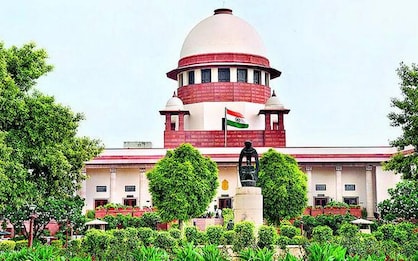
Typically, after a controversial law is passed, huge amounts of petitions and applications will be filed demanding the judiciary to look into the constitutionality of said laws.
Source: google images
Furthermore, if protests ensued, the police will most likely arrest or detain protestors as the trend is in recent years, which again is left to the courts to dispose of.
The above mentioned cases will put a huge strain on the already struggling judiciary with over 4.5 crore cases pending all over India[12]. Couple that with the large number of job vacancies in the judiciary[13]. The burden is too much to handle.
There are also other negative effects like economic losses and property damages caused by violent protests, public morality depletion, human rights violations, threats to the principles of democracy, hindrance to the country’s development and so on…
Thus these negative effects show us the impact that hurriedly passed laws have in our country. Our lawmakers identified the need for scrutinisation of bills and hence introduced the parliamentary committees, but they’re not used efficiently as envisioned. Laws are the sovereign rules and regulations that the people of a country should abide by. If they are not carefully studied and enforced it could lead to the fall of a nation.
Comments
Post a Comment